Why Hoboken works for mixed-use investors
Hoboken covers roughly 1.25 square miles, compact enough that most of it can be covered on foot, and it is served by several forms of transit. That density is what makes a building with ground-floor retail and apartments above it easy to understand as an investment: shoppers, diners and renters are all within a few blocks of one another.
- Fast access to Manhattan. The PATH train from Hoboken Terminal reaches the World Trade Center in about 11 minutes and 33rd Street in about 13 minutes, and PATH runs around the clock.
- Multiple ways to commute. Along with PATH, Hoboken has NJ Transit trains, light rail, ferries, and the NJ Transit 126 bus, which runs along Washington Street to the Port Authority Bus Terminal.
- A walkable retail spine. Washington Street carries the city's main concentration of restaurants, shops and services, with apartments above. See our guide to Washington Street.
How a mixed-use building earns income
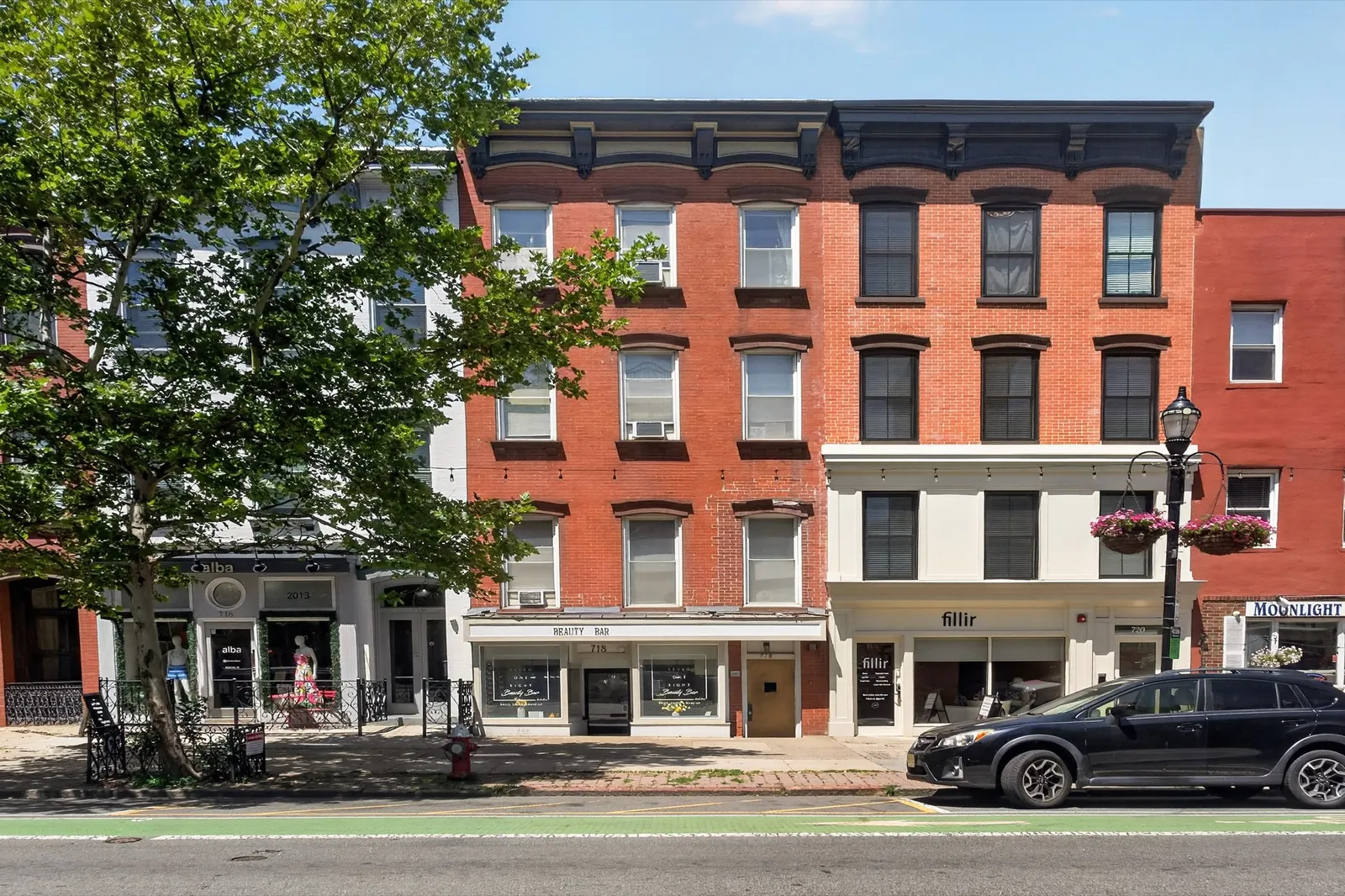
A building like 718 Washington Street has two kinds of income, and they behave differently.
Retail income
Commercial leases are usually longer and negotiated individually. Rent often steps up on a schedule, and the lease can pass some costs to the tenant. At 718 Washington Street, the storefront lease renews annually on 12/1 and includes +$75/yr escalations through 2036, and the retail space has its own water meter and water heater.
Residential income
Residential rents in Hoboken are regulated by the city's rent control ordinance, which is administered by the Rent Leveling and Stabilization Board. Registered units follow the ordinance's rules for annual increases, so income tends to be steady and predictable. The three apartments at 718 Washington Street are rent stabilized and registered with the City of Hoboken, with leases running through 06/30/2027.
Because the two income streams respond to different forces, a mixed-use building can be less dependent on any single tenant or lease cycle than a building with one use.
How to read the numbers: NOI and cap rate
Net operating income (NOI) is a property's income minus its operating expenses, before debt service and income taxes. The cap rate is NOI divided by the purchase price. It gives a quick way to compare buildings, but it depends entirely on whether the income and expense figures are real, so it should be tied to actual leases and documented bills.
Here is how it works for 718 Washington Street, using current in-place rents and documented 2026 operating expenses:
| Line | Amount |
|---|---|
| Annual gross income (retail + 3 apartments) | $126,912.60 |
| Real estate taxes | ($19,882.00) |
| Insurance | ($6,354.00) |
| Water + sewer | ($2,135.95) |
| PSE&G | ($1,953.37) |
| Fire alarm | ($761.30) |
| Net operating income | $95,825.98 |
| Asking price | $2,075,000 |
| Cap rate ($95,825.98 ÷ $2,075,000) | 4.62% |
Operating expenses of $31,086.62 equal about 24.5% of gross income. Real estate taxes are the largest single item at 64% of expenses.
Note on the cap rate: a cap rate only measures the current in-place income. It doesn't reflect future rent changes, vacancy, capital repairs, or how you finance the purchase. Treat it as the starting point of an analysis, not the conclusion.
A due diligence checklist for a Hoboken mixed-use purchase
- Rent roll and leases. Confirm every rent and lease date against the signed leases and bank deposits, not just the rent roll.
- Rent control status. For each residential unit, review the city registration and the rent history and increases on file with the Rent Leveling and Stabilization Office. Properties that miss annual registration can face higher fees and lose the ability to take certain increases, so check that it is current.
- Commercial lease terms. Read the escalation schedule, renewal and termination rights, permitted use, assignment rules, and who pays for utilities and repairs.
- Operating expenses. Ask for the actual bills behind each line: taxes, insurance, utilities, and the fire alarm service.
- Utilities and meters. Know which spaces have their own electric, water and gas meters and which are shared, since that decides who pays for what.
- Legal use and certificates. Verify that the building's legal use, certificate of occupancy and municipal inspections match how it is actually used.
- Physical condition. Inspect the roof, boiler, electrical and plumbing, plus the basement and any outdoor space, and price in near-term repairs.
Hoboken's rules change. For current details, see the City of Hoboken's rent control information and speak with a New Jersey real estate attorney.
Frequently asked questions
What is a mixed-use property?
A mixed-use property combines more than one type of use in a single building. In Hoboken that is commonly ground-floor retail with apartments above.
What is a good cap rate for a Hoboken mixed-use building?
There is no single answer. Cap rates depend on the building's condition, lease terms, rent control status, location and the market at the time of sale. 718 Washington Street is offered at a 4.62% cap rate on current in-place income and documented 2026 expenses.
How do rent-stabilized apartments affect the investment?
Registered units follow the city's rent control ordinance for annual increases, which tends to make income steady and predictable but limits how quickly rents can rise. Buyers should review each unit's registration and rent history.
Who pays the utilities in a mixed-use building?
It depends on the meters and the leases. At 718 Washington Street, electric is separately metered, the retail space has its own water meter and water heater, and the residential units share one water meter.